If you live in Palm Beach or Martin County, you already know the drill. The water gets warm, the forecasters start naming things, and everybody suddenly remembers they've been meaning to do something about that roof.
Here's the truth we've learned in the field: hurricanes rarely destroy a healthy roof. They find the weak spot and pull. A single lifted shingle tab, one cracked tile, a dried-out screw washer, a soffit panel that was never properly fastened — that's the opening. Once wind gets under a roof system, it doesn't stop at the failure point. It peels.
Which means the most important hurricane preparation you'll ever do doesn't happen in the 48 hours before landfall. It happens in the quiet months, in the form of ordinary, unglamorous maintenance.
This guide covers what that maintenance actually looks like in South Florida, what changes depending on whether you've got tile, shingle, metal, or flat roofing, and what to do when a storm is actually on the way. Use it whether you hire us or not — we'd rather your roof hold than have your business.
Preventative Maintenance: The Habit That Buys You Years
The single best return on investment in roof ownership is a professional inspection
twice a year — ideally in
spring, before hurricane season starts June 1, and again in
late fall, after the season ends November 30. Add a third look after any named storm or unusually severe weather.
Between professional visits, here's what you can safely handle yourself from the ground or a ladder at the edge.
- Clean gutters and downspouts at least twice a year, more if you're under oaks or pines. Backed-up water rots fascia and finds its way behind the drip edge.
- Trim trees back so no branch is within six feet of the roofline. Branches abrade roofing surfaces in normal wind and become battering rams in a hurricane.
- Check your soffits from the ground. Loose, sagging, or missing soffit panels are one of the most underrated hurricane vulnerabilities in Florida — when wind enters the attic through a failed soffit, it pressurizes the space and pushes the roof deck up from underneath. Homes lose roofs this way every season.
- Look at your attic with a flashlight after heavy rain. Water stains on decking or rafters, damp insulation, rusted nail tips, or any daylight where daylight shouldn't be — those are early warnings you can catch months before a ceiling stain appears.
- Scan the roof. Displaced tiles, lifted shingles, rust streaks, sagging lines, debris piled in valleys.
Care Tips by Roof Type
Tile Roofs (Concrete and Clay)
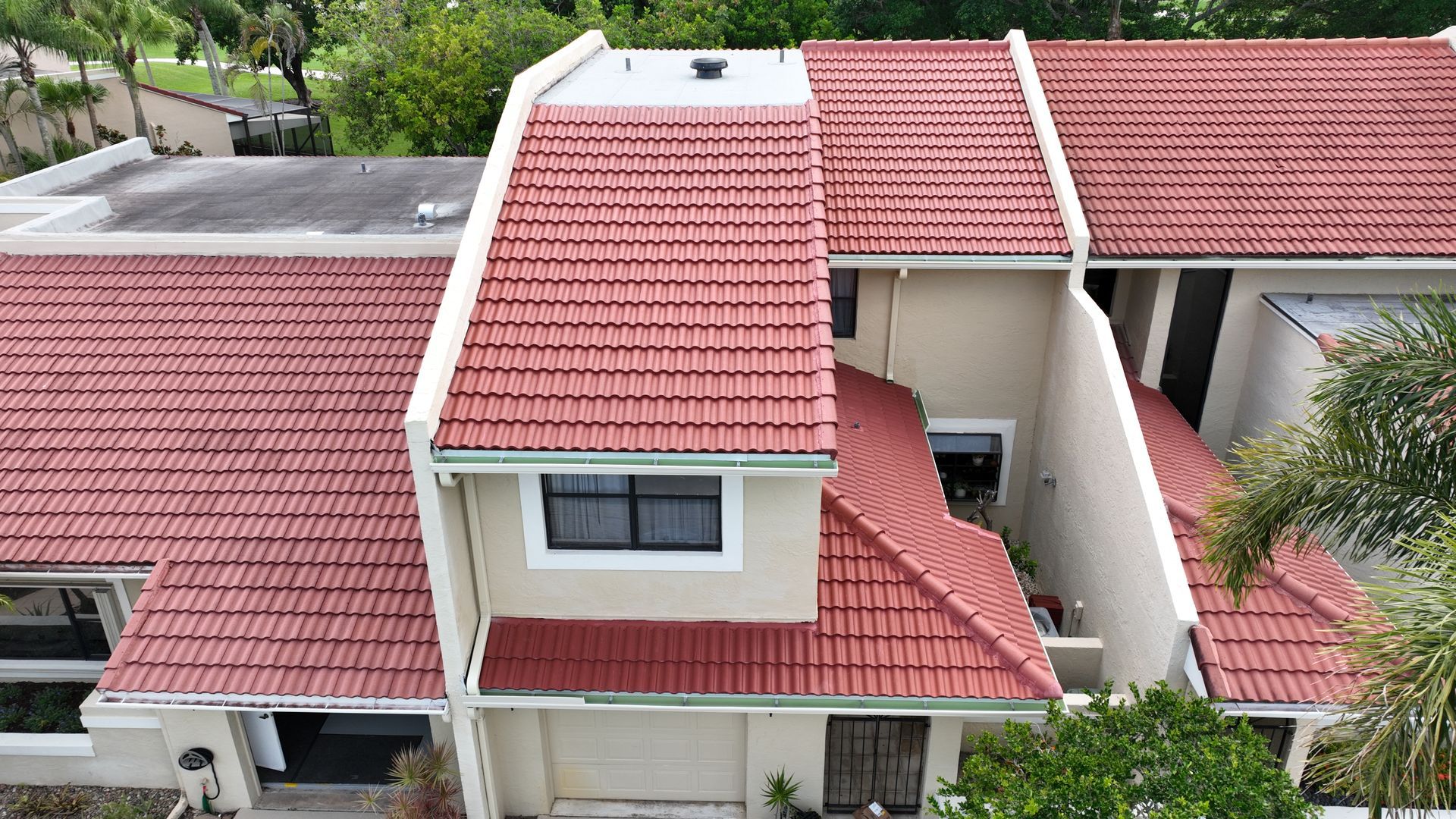
Concrete or clay tile can easily last 50 years — but the underlayment underneath typically has a 20 to 25 year service life. Plenty of homeowners are living under a beautiful tile roof with an underlayment that quietly expired years ago.
What to watch:
- Cracked, chipped, or slipped tiles, especially along hips, ridges, and valleys. In wind, a broken tile becomes a projectile and leaves the underlayment directly exposed to UV and rain.
- Cracking or crumbling mortar at hips and ridges. Older mortar-set ridge systems fail long before the field tile does. Modern mechanically fastened ridge systems hold up far better.
- Debris in valleys. Palm fronds and leaf litter dam up water and force it sideways under the tile.
- Never walk on tile unless you know exactly how. Foot placement is specific — the lower third of the tile, over a batten. Everyone else cracks tiles just getting to the problem.
Tile roofs reward maintenance more than any other system here, because a $400 repair of a few broken tiles genuinely can protect an underlayment that has fifteen good years left.
Asphalt Shingle Roofs
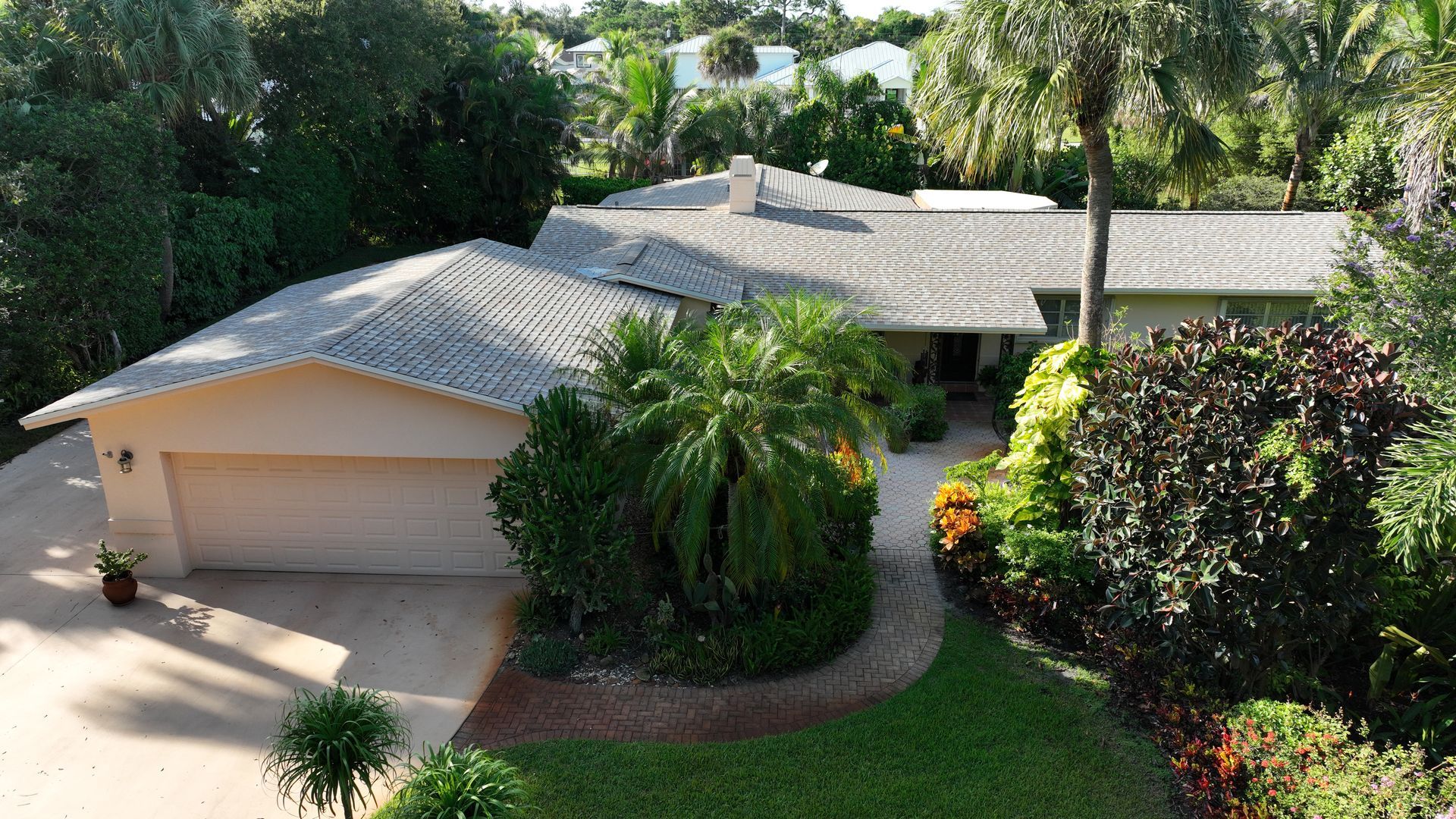
Shingles are the most common system in our area and the most sensitive to wind uplift.
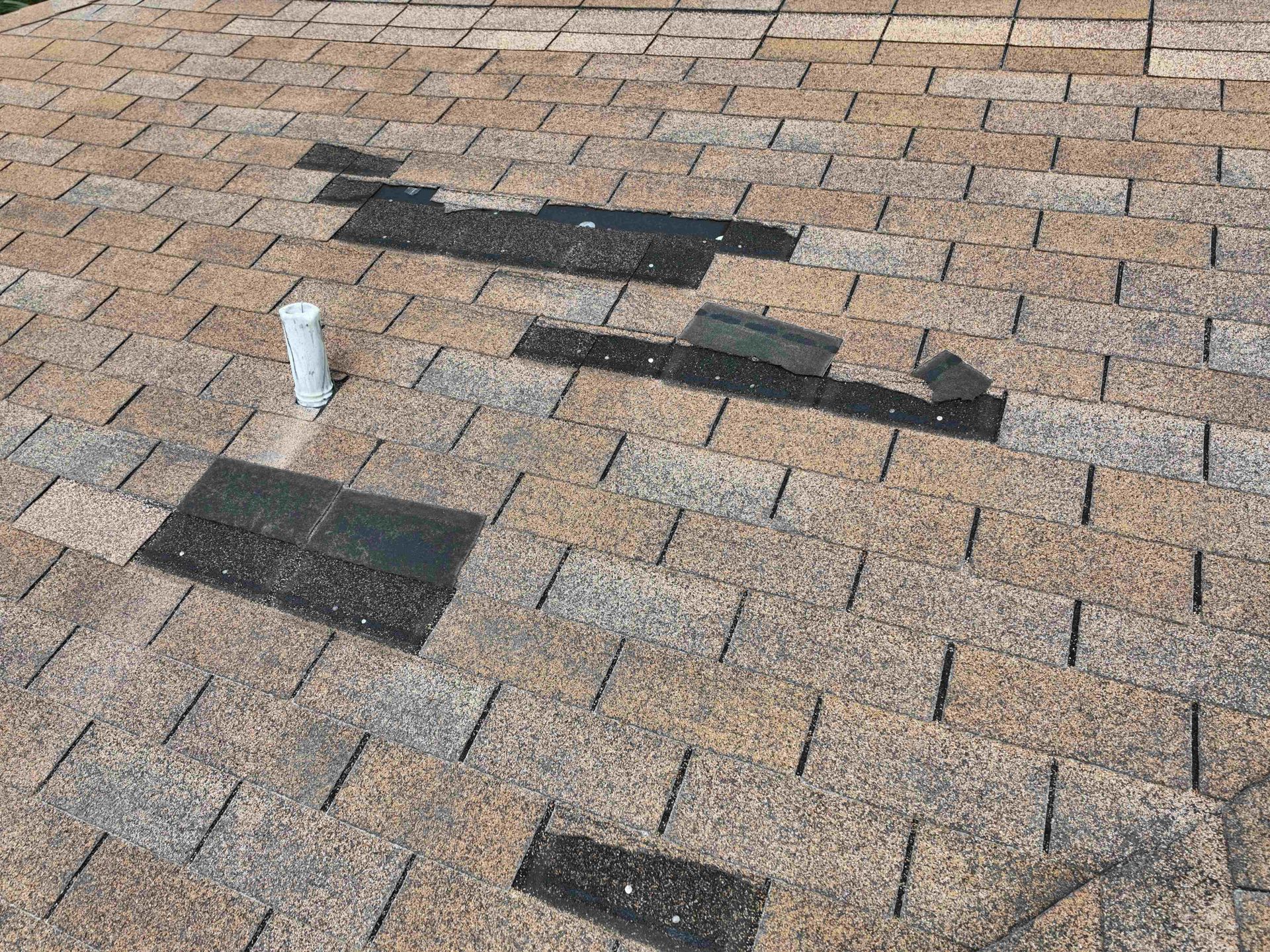
- Check the seal strip. Shingles bond by heat. Shingles installed during a cool stretch, or shingles that have been lifted once by wind, may never re-seal — and an unsealed tab is a hurricane's favorite handhold.
- Watch for granule loss. Granules in your gutters or at the bottom of downspouts mean the shingle is losing its UV shield. Some shedding is normal in the first year after installation; ongoing loss is not.
- Curling, cupping, or clawing edges signal the shingle is drying out and nearing end of life.
- Inspect edges and ridges closely. Rakes, eaves, and ridge caps carry the highest uplift pressure. Starter strip failure at the eave is a common origin point for progressive blow-off.
- Nail pops show up as small raised bumps in the field. Each one is a future leak.
- Soft wash only for algae streaks — never a pressure washer.
Metal Roofs
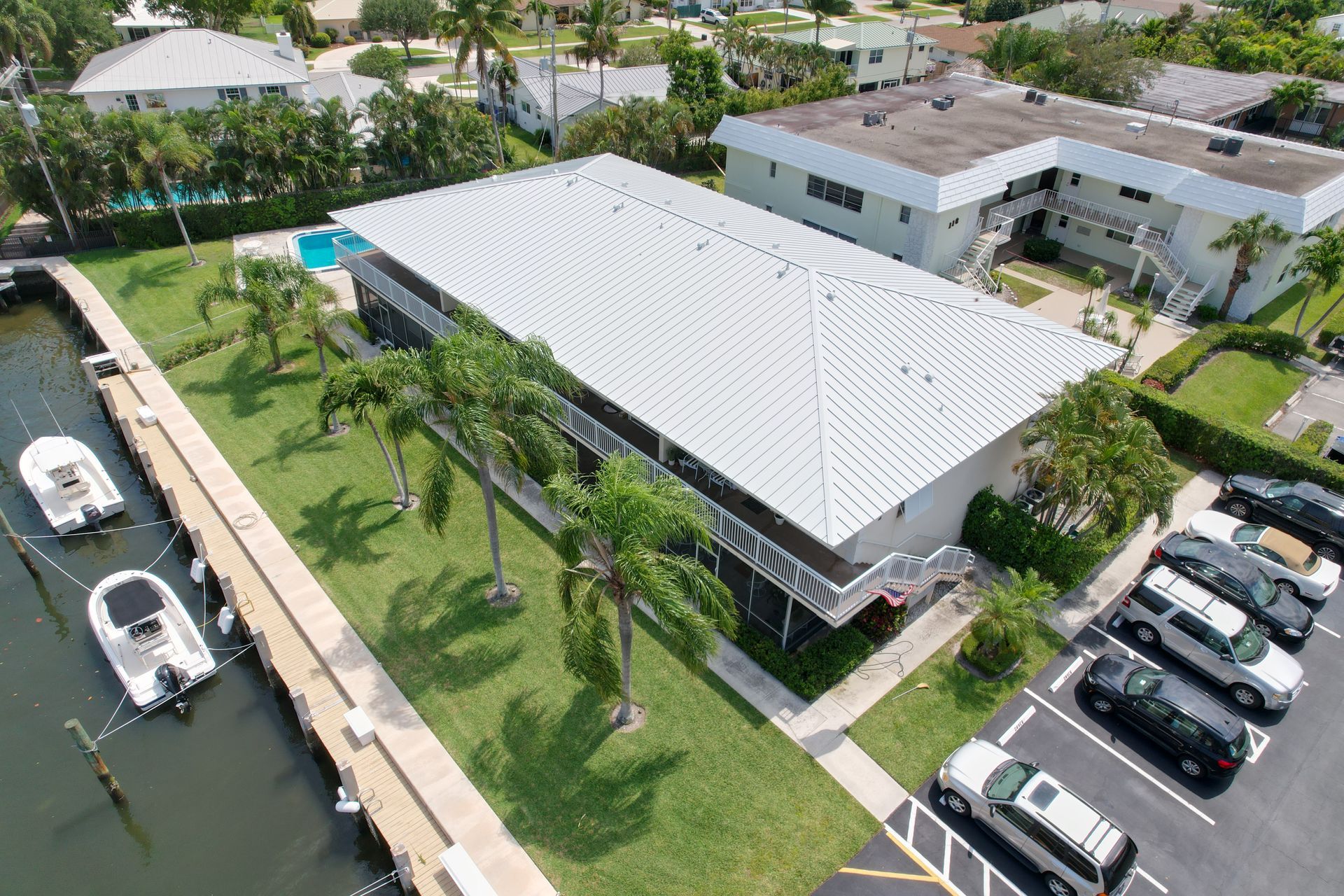
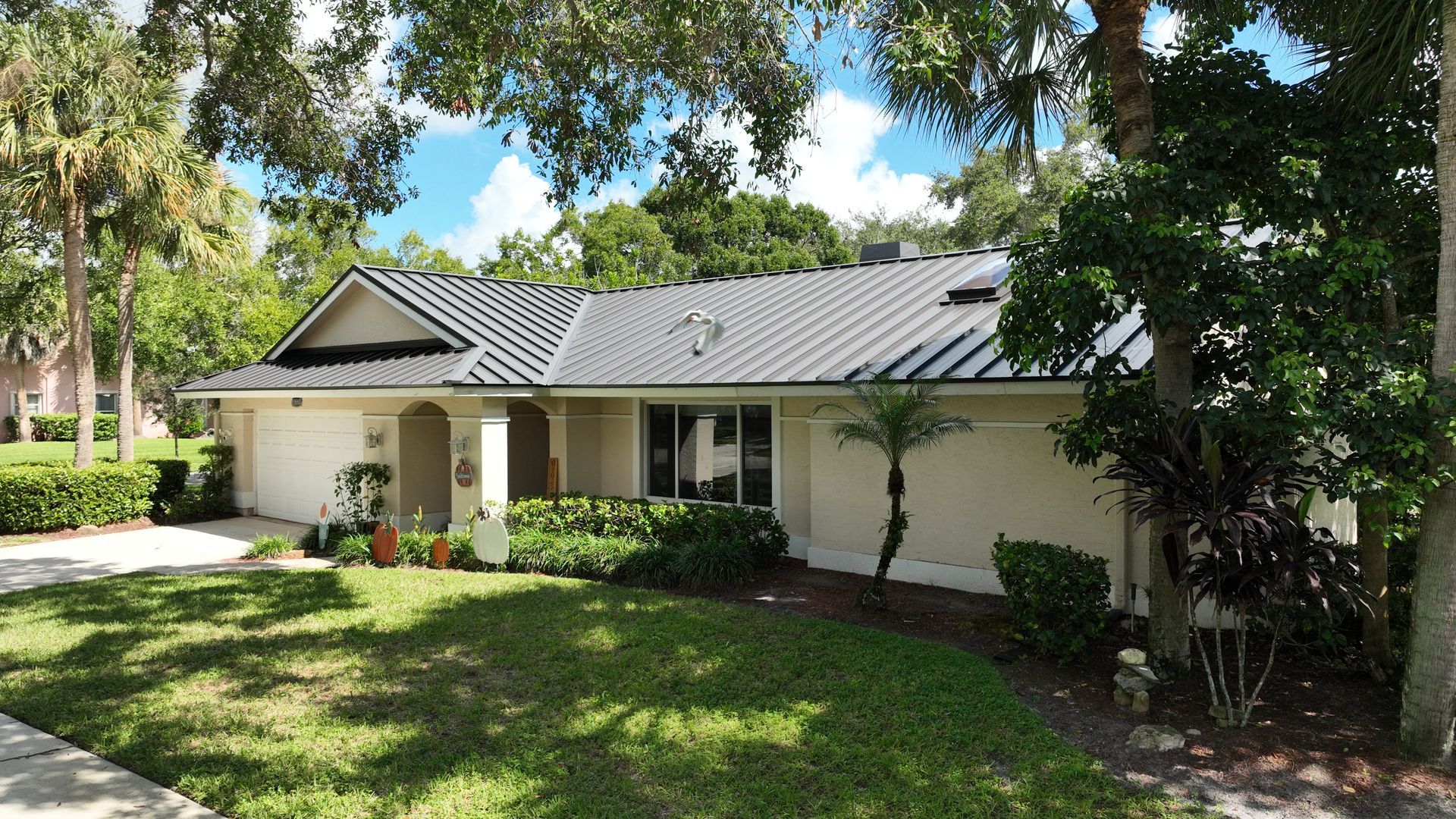
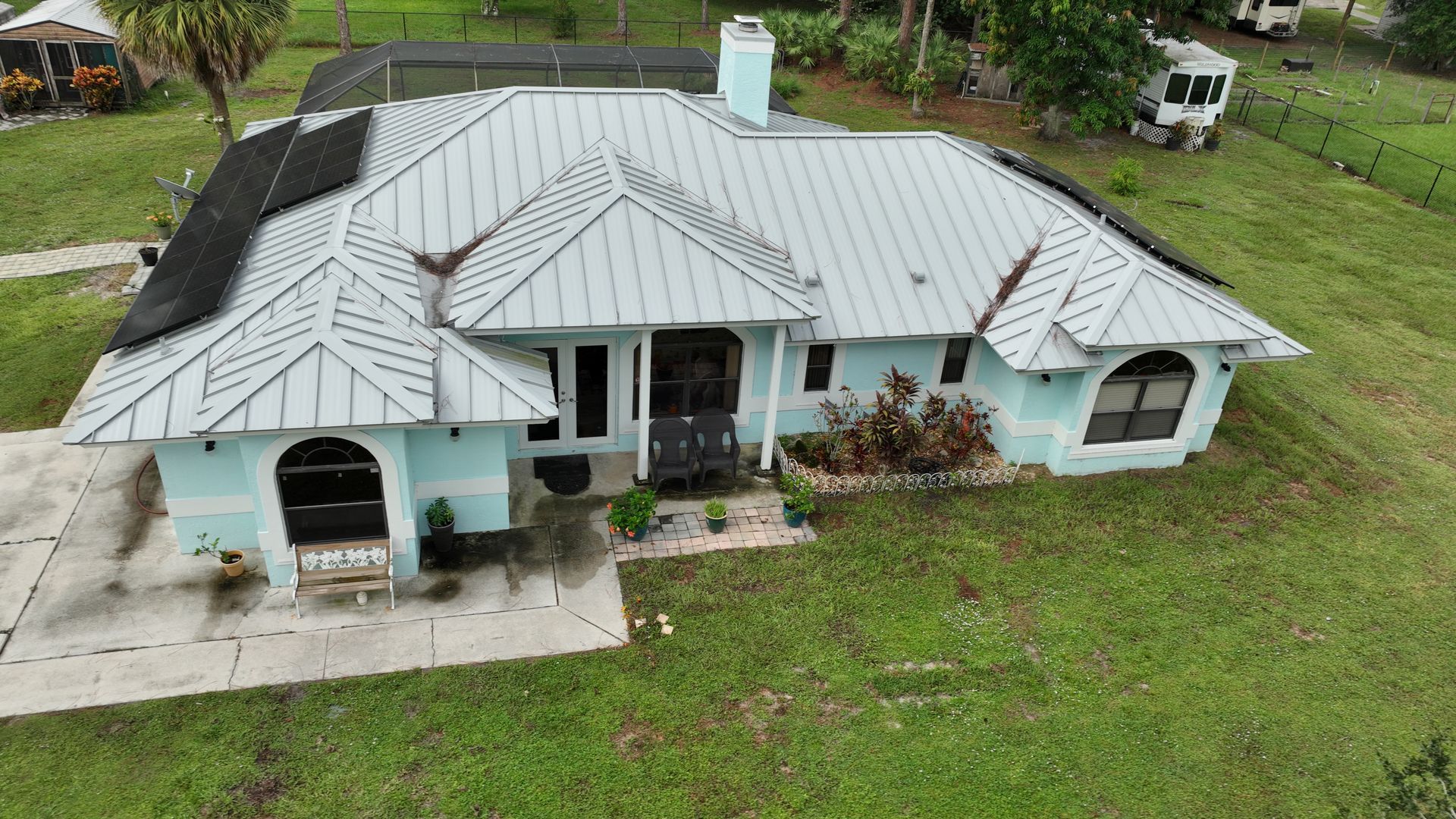
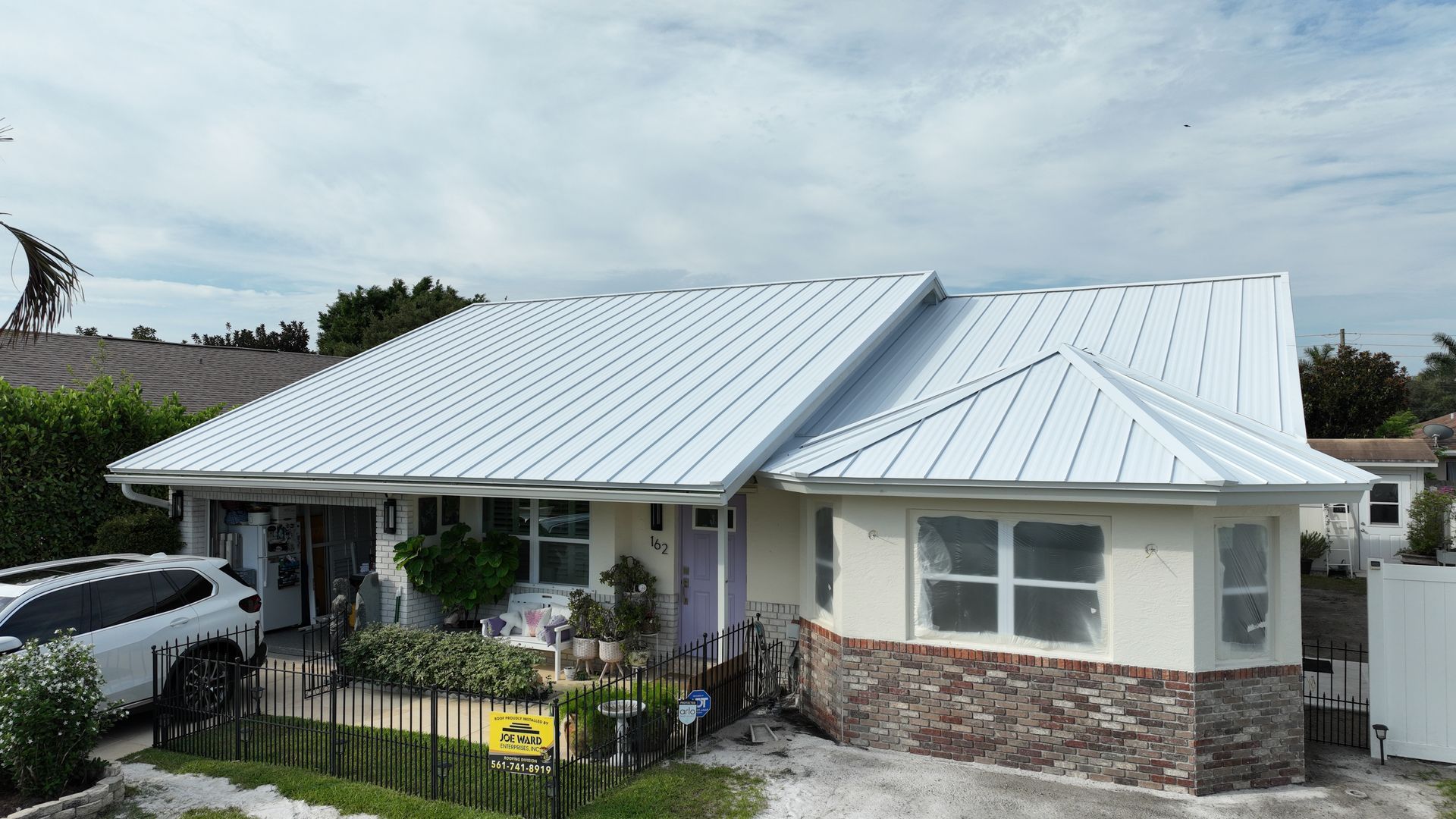
Metal is outstanding in wind when it's installed and maintained correctly. Its weak points are the fasteners and the penetrations, not the panels.
- Standing seam: oil canning (that wavy look in the flats) is cosmetic.
Seam separation is not — that's a call-us-today item.
- Corrosion at cut edges, scratches, and dissimilar metal contact. Near the coast, rust bleed shows up at panel ends and around any fastener that isn't the right alloy.
- Rinse coastal metal roofs with fresh water a couple of times a year. It sounds too simple to matter. It measurably extends life in salt air.
- Re-seal penetrations. Pipe boots, curbs, and vent flashings are where nearly all metal roof leaks originate.
- If you must walk it, step on the flat sections directly over a purlin or rafter, never on the ribs or seams.
Flat and Low-Slope Roofs
Common on additions, Florida rooms, patios, and much of our commercial work — TPO, modified bitumen, built-up, and coated systems.
- Clear drains, scuppers, and gutters on a schedule. This is the number one flat roof failure cause we see, and it's completely preventable.
- Inspect seams, laps, and flashing at parapet walls and anywhere the roof meets a vertical surface.
- Look for blisters, splits, and punctures. Punctures are frequently caused by HVAC technicians walking the roof with tools. If you have rooftop equipment, install walk pads.
- Coatings need recoating. Silicone and acrylic systems typically need renewal roughly every 10 years, depending on product and exposure.
- Check HVAC condensate lines while you're up there. A dripping line will quietly destroy a membrane.
Your Hurricane Preparation Timeline
Before June 1 — Season Prep
- Schedule a professional roof inspection and complete any repairs. Don't wait for a storm in the cone; every roofer in three counties is booked solid at that point.
- Photograph your roof and document its condition, with dates. From the ground, from a ladder, from a drone if you have one. This is your baseline evidence if you ever file a claim, and it's the single most valuable free thing on this list.
- Review your policy: coverage limits, your
separate hurricane deductible (usually a percentage of dwelling value, not a flat dollar amount), and whether you carry
law and ordinance coverage — that's the coverage that pays the added cost when code requires upgrades during a repair.
- Consider a
wind mitigation inspection (form OIR-B1-1802). It documents features like roof deck attachment, roof-to-wall connections, secondary water barrier, and opening protection. Many homeowners see meaningful premium credits, and the inspection itself is inexpensive.
- Look into the
My Safe Florida Home program at mysafeflhome.com. It pairs a free wind mitigation inspection with matching grants for qualifying hardening improvements. Funding cycles, eligibility, and application windows change from year to year, so check current status directly with the program — and note that starting work before you receive approval will disqualify you.
72 Hours Out — Storm Watch
- Clear gutters, drains, and scuppers one final time.
- Bring in or secure everything in the yard. Patio furniture, planters, grills, umbrellas, and trash cans all become roof-piercing debris at 100 mph.
- Secure or remove loose roof-mounted items where safe — satellite dishes, loose vent covers, unsecured solar attachments.
- Take fresh dated photos of the roof and the property.
- Put your insurance policy number, agent contact, and your roofer's number somewhere you'll have them without power or internet.
After the Storm
- Stay off the roof. Storm-damaged decking fails under weight, and there may be live lines down nearby. Assess from the ground.
- Photograph everything before touching anything — roof, interior stains, fallen debris, damaged fascia and soffit.
- If you have active water intrusion, get a proper emergency tarp installed and
save every receipt. Reasonable mitigation costs are typically reimbursable, and failing to mitigate can hurt your claim.
- Call a
licensed, local, insured contractor. After every major storm, out-of-state crews flood in, take deposits, and disappear. Verify any license at the Florida DBPR website before signing or paying anything. Be aware that Florida law restricts contractors from offering to pay or waive your insurance deductible — anyone offering a "free roof" that way is telling you something about how they operate.
- Watch the clock on your claim. Under current Florida law, the window for filing an initial or reopened hurricane claim is
one year from the date of loss, with supplemental claims due at
18 months. For hurricanes, the date of loss is the date of landfall — not the day you discovered the damage. These deadlines were shortened significantly in recent years, and missing one can bar an otherwise valid claim entirely.
Two Florida Rules Worth Understanding Before You Need Them
The 25% Rule. Florida's building code has long limited how much of an existing roof can be repaired, replaced, or recovered in any 12-month period — cross roughly 25% of the roof area or roof section, and the entire system generally has to be brought up to current code. There is an important exception for roofs originally built to the 2007 Florida Building Code or later, where the undamaged portion already meets a modern standard. Practically, this matters because a series of small repairs can add up across a year, and because storm damage that exceeds the threshold can turn a repair claim into a full replacement claim.
Roof age and insurability. Florida carriers are permitted to consider roof age in underwriting, and inspections are commonly triggered somewhere in the 15 to 20 year range. This is one more reason maintenance matters: a well-documented, well-maintained roof is a far easier conversation with an underwriter than one nobody has looked at since it was installed.
Building code and insurance regulations in Florida change frequently. Treat the above as general orientation, and confirm specifics with your carrier, your agent, and your local building department.
Warning Signs You Shouldn't Wait On
Call a roofing contractor now — not after the next storm — if you see any of these:
- Water stains on ceilings or walls, even faint ones, even if they seem to have stopped
- Daylight visible through the roof deck from inside the attic
- Sagging or dipping in the roof line
- Multiple cracked, slipped, or missing tiles or shingles
- Rust streaks, seam separation, or backed-out screws on metal
- Water still standing on a flat roof more than 48 hours after rain
- Granules accumulating in gutters
- Loose, damaged, or missing soffit panels
- Any roof over 15 years old that hasn't been professionally inspected in the last two years
The Short Version
A roof is a system, not a surface. It's the covering, the underlayment, the fasteners, the flashing, the drip edge, the soffit, and the deck — and a hurricane will find whichever one of those has been neglected longest.
Two inspections a year. Clear drainage. Trimmed trees. Sealed penetrations. Documented condition. Repairs made in April instead of deferred to September.
That's the whole program. It costs a fraction of a roof replacement, and it's the difference between a storm that damages your roof and a storm that takes it.
Frequently Asked Questions
How often should a Florida roof be inspected? Twice a year is the standard we recommend — once before hurricane season begins June 1, and once after it ends November 30. Add an inspection after any named storm or severe weather event, regardless of whether you see obvious damage from the ground.
Will roof maintenance lower my insurance premium? Maintenance alone typically doesn't change your premium directly, but it protects your insurability, and documented roof condition strengthens any future claim. A wind mitigation inspection is the tool that most often produces a direct premium credit, since it documents the specific hurricane-resistant features your roof already has.
What should I do first if my roof is damaged in a hurricane? Stay off the roof and assess from the ground. Photograph all damage before moving anything. Arrange emergency tarping if water is actively entering, and keep every receipt. Then contact your insurance carrier and a licensed local contractor. Remember that Florida's initial claim filing window is one year from the date of landfall.
Is it worth repairing an older roof, or should I just replace it? That depends on the roof's age, the extent of the problem, and Florida's 25% rule — repairs exceeding roughly a quarter of the roof area within 12 months can trigger a full code-compliant replacement. A licensed contractor should measure and document the affected area and give you both options honestly, including what each one realistically buys you in remaining service life.
Can I pressure wash my roof to remove black streaks?
Those streaks are algae and they can be removed — but the method matters a great deal. High pressure can strip the protective surface from concrete tile, remove granules from asphalt shingles, and force water underneath the roof covering. A low-pressure soft wash using an appropriate cleaning solution achieves the same result safely. If you're hiring a cleaning service, ask what pressure they use and confirm they soft wash roofs specifically.
Get a Straight Answer About Your Roof
Joe Ward Roofing is a family-owned company serving Palm Beach and Martin Counties. We'll come out, get on your roof, and tell you exactly what we find — including when the honest answer is "this is fine, see you next year."
No pressure, no scare tactics, no manufactured urgency. Just a clear assessment of what your roof needs to get through the season.
Schedule your inspection: 561.741.8919
Or request an estimate online:
Licensed and insured. License #CCC1335233