You’ve done the homework. Metal looks sharp, it stands up to Florida storms, and it can outlast most shingle roofs. Then the question hits: what is the HOA going to say?
It’s one of the most common questions we hear from homeowners across Palm Beach and Martin Counties, and the answer has changed in the last couple of years. Here’s a plain-English look at where Florida law stands, what your HOA can still control, and how to build an application that gets a “yes.” We’ll also cover why so many homeowners are making the switch to metal in the first place.
This article is general information, not legal advice. Every community’s documents are different, so read yours closely and talk with an attorney who handles HOA matters if you run into a denial.
The Short Answer
Florida law works more in your favor than it used to, but it isn’t a blank check.
Since 2024, every homeowners’ association in the state has been required to adopt written hurricane protection specifications, and an HOA cannot deny an application for hurricane protection, including a code-compliant roof system, that meets those specifications. At the same time, your HOA still gets a say in color, style, and how your roof fits the look of the neighborhood.
So the real question isn’t “does my HOA allow metal?” It’s “what do my HOA’s written specifications say, and does the metal roof I’m choosing fit them?” That’s very answerable, and we’ll show you how.
What Florida Law Actually Says
In May 2024, Florida enacted House Bill 293, which added a new subsection to
Florida Statute 720.3035, the law that governs HOA architectural control. Here’s what it does:
- Every HOA must adopt hurricane protection specifications. The board, or its architectural review committee, must adopt specifications for each structure or improvement in the community, and those specifications must comply with the applicable building code.
- It covers older communities, too. The law applies to all HOAs in the state, regardless of when the community was created.
- It limits the board’s ability to say no. Notwithstanding what the governing documents say, the board may not deny an application to install, enhance, or replace hurricane protection that conforms to its adopted specifications.
- It specifically names roofs. “Hurricane protection” includes roof systems recognized by the Florida Building Code that meet ASCE 7-22 wind standards, along with storm shutters, impact-resistant windows and doors, reinforced garage doors, and more.
- It still lets the HOA protect the neighborhood’s look. The specifications can address color, style, and other factors, and the board can require owners to follow an existing unified building scheme for the exterior appearance of the home.
Two more recent changes also work in homeowners’ favor:
- Denials have to be explained. If an architectural request is denied, the association must give written notice that cites the rule or covenant it relied on.
- You don’t need a permit in hand first. Effective July 1, 2026, an HOA or its architectural committee cannot require you to have a building permit before it reviews your application. It can still grant conditional approval that depends on you getting the permit.
What Your HOA Can Still Control
The law protects your ability to upgrade to a code-compliant, storm-ready roof. It does not turn the HOA into a bystander. Expect your board to have opinions about:
- Color. Many communities publish an approved palette, and some limit how bright or dark a roof can be.
- Panel profile and style. Standing seam, mechanical seam, tile-profile, and shingle-profile metal all look very different from one another. A board may prefer one over another.
- Finish. Matte versus glossy can matter in communities that want a quieter look.
- Visible details. Trim, ridge caps, vents, and flashing colors are fair game.
- The application process. Forms, samples, fees, and review timelines come from your declaration and guidelines.
There’s a gray area worth knowing about, too. The statute requires boards to adopt hurricane protection specifications, but it doesn’t say every type of roof must be approved. Some Florida attorneys read the law as leaving boards considerable room to decide which styles fit their community, so long as the specifications comply with the building code and are applied consistently. The law is also still new, and there’s little court guidance so far. That’s one more reason to read your community’s specifications before you pick a panel.
Live in a condo or townhome community? Different rules may apply. Condo roofs are typically a common element handled by the association, so the decision often isn’t yours individually. If you’re on a condominium board or property manager, see our
condominium roofing page.
How to Get Your Metal Roof Approved
- Get your documents. Pull your declaration, architectural guidelines, and the HOA’s hurricane protection specifications. If you can’t find the specifications, ask the board or management company for them. Associations are required to have them.
- Choose a profile and color that fit. Drive the neighborhood. Look at what’s already approved. Your roofer can match your options to what the specifications allow.
- Submit a complete package. Include product data sheets and installation details, the product’s wind-rating or Florida Building Code approval documentation, color samples, photos of similar completed installations, and your contractor’s license and insurance. Complete applications get faster answers.
- Apply before you have the permit. Since July 2026, the HOA can’t make you wait on one. Ask for conditional approval if needed.
- Get the decision in writing. If you’re denied, the HOA must cite the rule or covenant it relied on. Ask what change would make the roof approvable, and ask to be heard at a board meeting.
- Know your options. For disputes about changes to your property, Florida law generally requires presuit mediation before a lawsuit can be filed against an association. An attorney who handles HOA law can tell you where you stand.
At Joe Ward Roofing, we help homeowners put this package together all the time. We can provide product documentation and walk you through profiles and colors that tend to sit well with architectural review boards.
Why Many Homeowners Are Switching to Metal Roofs
In Florida, your roof is your first line of defense against wind, rain, and relentless sun. Here’s what’s driving more homeowners toward metal.
1. Storm performance. Well-engineered metal systems, especially standing seam with interlocking panels and concealed fasteners, are commonly tested to wind speeds of 140 mph and higher, depending on the product and how it’s installed. Fewer exposed fasteners also means fewer potential leak points. One honest caveat: roofs tend to fail at edges, ridges, and fasteners, so installation quality matters as much as the material.
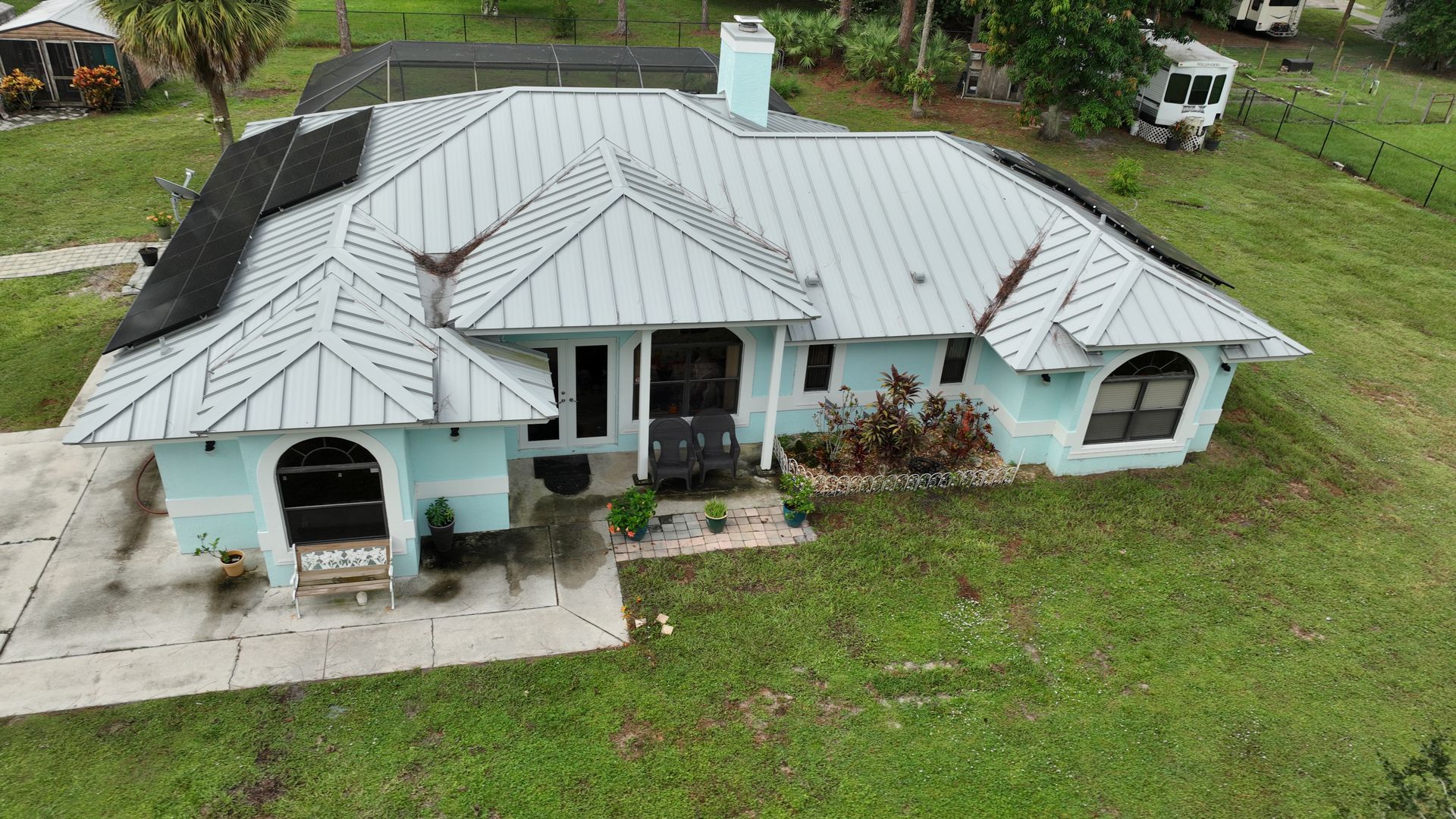
2. Longevity. A properly installed metal roof is commonly cited as lasting 40 to 70 years. Asphalt shingles in Florida’s heat often last 15 to 20. For a homeowner planning to stay put, that can mean skipping one or two full replacements.
3. Insurance. Under Florida law, insurers must offer premium discounts for qualifying wind-mitigation features, and a roof covering that meets the current Florida Building Code is one of them.
Florida’s Chief Financial Officer lists metal panels among the qualifying roof coverings, along with roof deck attachment, roof-to-wall connections, and roof shape. To be clear, metal isn’t an automatic discount, and code-compliant shingle and tile roofs can qualify too. The credit comes from a documented wind mitigation inspection, and the amount varies by carrier. Ask your agent what a new roof would be worth to you.
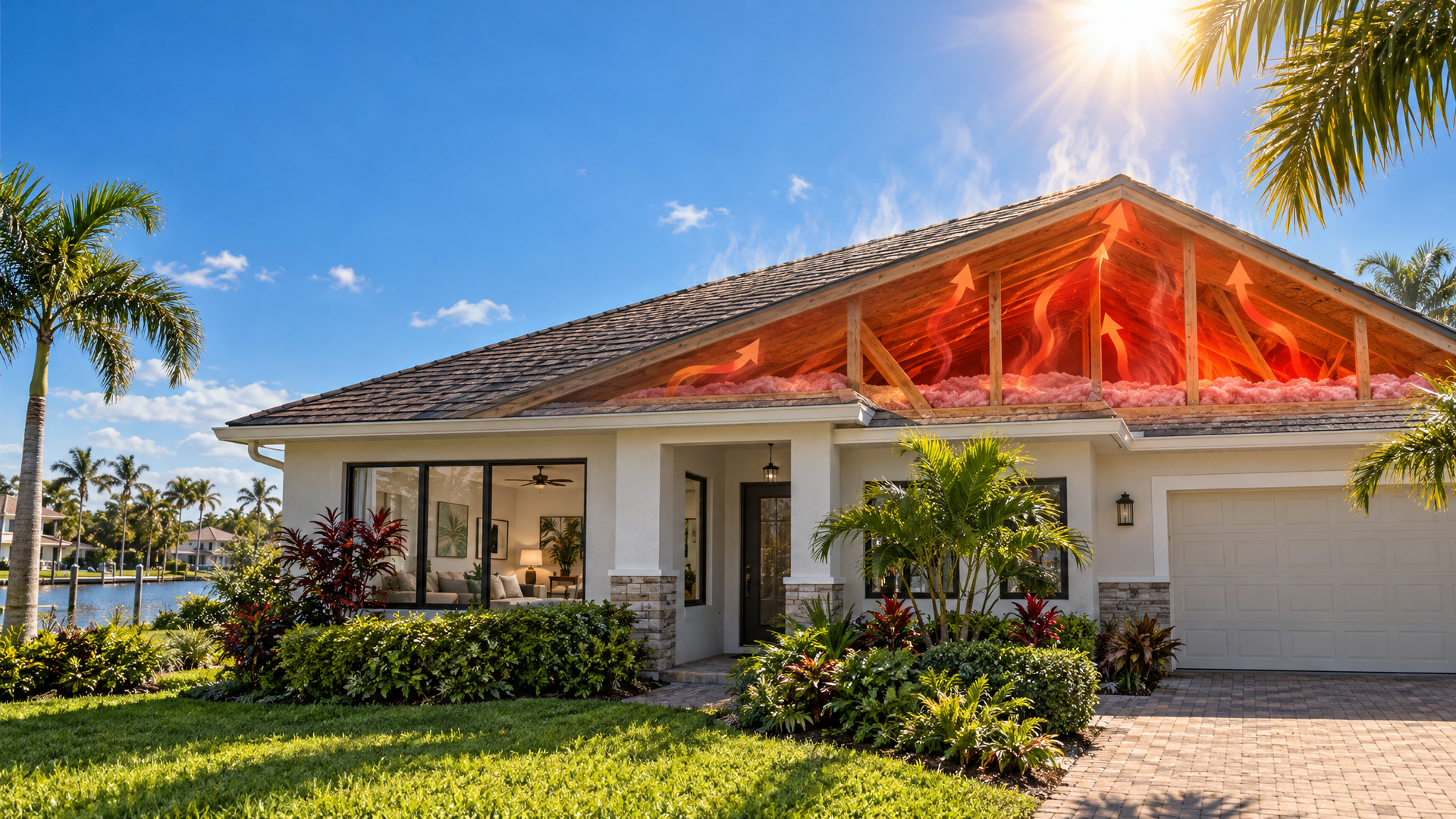
4. Lower cooling costs. A well-known study by the Florida Solar Energy Center and Florida Power & Light on identical homes in Fort Myers found that a white reflective metal roof
cut cooling energy use by roughly 23% compared with dark gray shingles. Light-colored tile performed similarly, so color and reflectivity matter as much as the material. Your results will also depend on your insulation and attic ventilation. See our post on
how attic heat shortens roof life.
5. Less maintenance. Metal doesn’t crack, curl, or shed granules the way aging shingles do, and its smooth finish is less inviting to the algae streaking Florida humidity causes on shingles. It isn’t maintenance-free, though. Fasteners, flashing, sealants, and penetrations still deserve a periodic look.
6. Lighter than tile. Metal weighs a fraction of what concrete tile does, which can matter on older homes and in communities where tile roofs are the norm and tile-profile metal is a possible alternative.
7. A smaller footprint. Metal roofing is recyclable at the end of its life and is often made with recycled content.
The trade-off: Metal costs more up front than shingles. The payback comes over time through longevity, insurance, and energy savings, which is why it tends to make the most sense for homeowners who plan to stay. Near the water, salt air is also a factor in choosing the right metal, so ask us what fits your location.
Frequently Asked Questions
Can my Florida HOA deny a metal roof? Not if your application conforms to the hurricane protection specifications the HOA has adopted. The HOA can still set rules about color, style, and appearance, so your first step is reading those specifications.
What if my HOA hasn’t adopted hurricane protection specifications? Florida law requires every HOA to adopt them. If yours hasn’t, raise it with the board in writing before or alongside your application.
Do I need HOA approval and a building permit? Usually both. You’ll need HOA approval under your community’s documents and a permit from your city or county. Since July 1, 2026, the HOA can’t require the permit before it reviews your application, but it can make its approval conditional on you getting one.
Will a metal roof lower my homeowners insurance? Possibly. Insurers offer wind-mitigation credits for qualifying features, and the discount depends on your carrier and a documented inspection. Metal is one way to earn it, not the only one.
How long does a metal roof last in Florida? A properly installed metal roof is commonly cited as lasting 40 to 70 years, depending on the system, coating, and maintenance.
Thinking About Metal? Start With a Conversation
Whether you’re still deciding between metal, tile, and shingle or you’re ready to submit your HOA application, we’re glad to help. Joe Ward Roofing has served Palm Beach and Martin Counties since 1986. We’re a third-generation, family-owned company, fully licensed, insured, and OSHA certified, and we’ve installed metal roofs in places like
The Shores of Jupiter,
North Palm Beach, and
Loxahatchee.
Free estimates come within 24 to 36 hours, and we’ll help you gather the documentation your HOA is going to ask for. Call us at
(561) 221-0439 or
request your free estimate online. You can also learn more about our
metal roofing services.