Open your attic hatch on an August afternoon and the heat hits you like an oven door. Most people shut it and move on. After decades of roofing homes in Palm Beach and Martin Counties, we can tell you that blast of hot air deserves a second look.
An attic that can’t breathe is hard on your roof, hard on your air conditioner, and hard on your wallet. The good news is that the fix is usually one of the least expensive things on the whole roof.
What Trapped Heat Actually Does
On a summer day, a Florida attic can pass 130°F, and on the worst days it can top 150°F. All that heat sits right under your roof deck. Over the years, here’s what happens:
- It ages your shingles from underneath. The sun already beats down on them from above. Heat from below piles on.
- It holds moisture in. Florida humidity gets trapped up there with the heat, which is how you end up with mold, musty smells, soft decking, and rusty fasteners.
- It makes your AC work overtime. Heat soaks through the ceiling into the rooms below. If your air handler or ductwork lives in the attic, they’re working in that oven too.
A House Has to Breathe In, Not Just Out
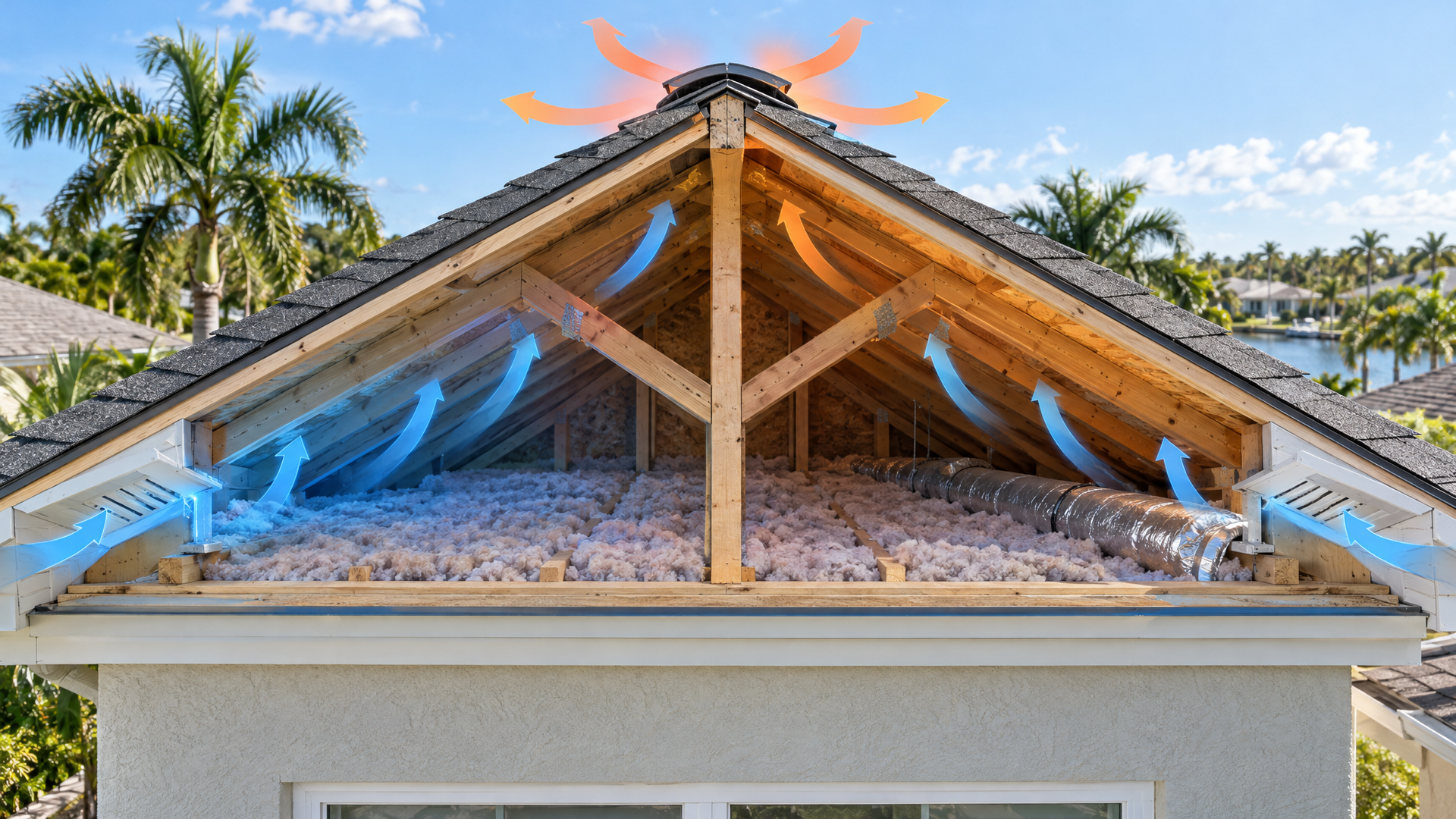
Think of a healthy attic like a healthy set of lungs. Cooler air comes in low, through the soffit vents under your eaves. Hot air goes out high, through the ridge or other roof vents. In, then out. Both halves have to work.
Here’s what we see all the time: plenty of ways out, hardly any way in. The ridge vent is up there doing its best, but if the soffit vents are painted shut, buried under insulation, or were never installed, it’s trying to exhale without ever inhaling. It starts pulling air from wherever it can find it, including the gaps in your ceiling.
You wouldn’t buy a car with a great exhaust and no air intake. Your roof shouldn’t have to settle for that either.
What About a Solar Attic Fan?
Great question, and for many Florida homes, a good one to ask.
A solar attic fan runs on sunlight, so there’s no wiring and no electric bill. It also works hardest when your attic needs it most, on those blazing afternoons when the sun is at its strongest. Because a solar unit moves air gently compared to a grid-powered fan, it’s far less likely to tug conditioned air out of your living space. That’s the problem you hear about with plug-in attic fans.
One option we like is the
Solar Star line from Solatube. It’s a solar-powered attic fan with a brushless motor, and it’s available with a thermal switch so it runs when your attic is actually hot. The line also includes a hurricane-rated model built for high-wind areas, which matters here on the coast. Solatube sizes its models by attic square footage, so we’d match one to your home.
Curious whether one makes sense for your home? Ask us about the Solar Star line during your inspection.
Is Your Attic Waving a Flag?
You don’t need to be a roofer to notice these:
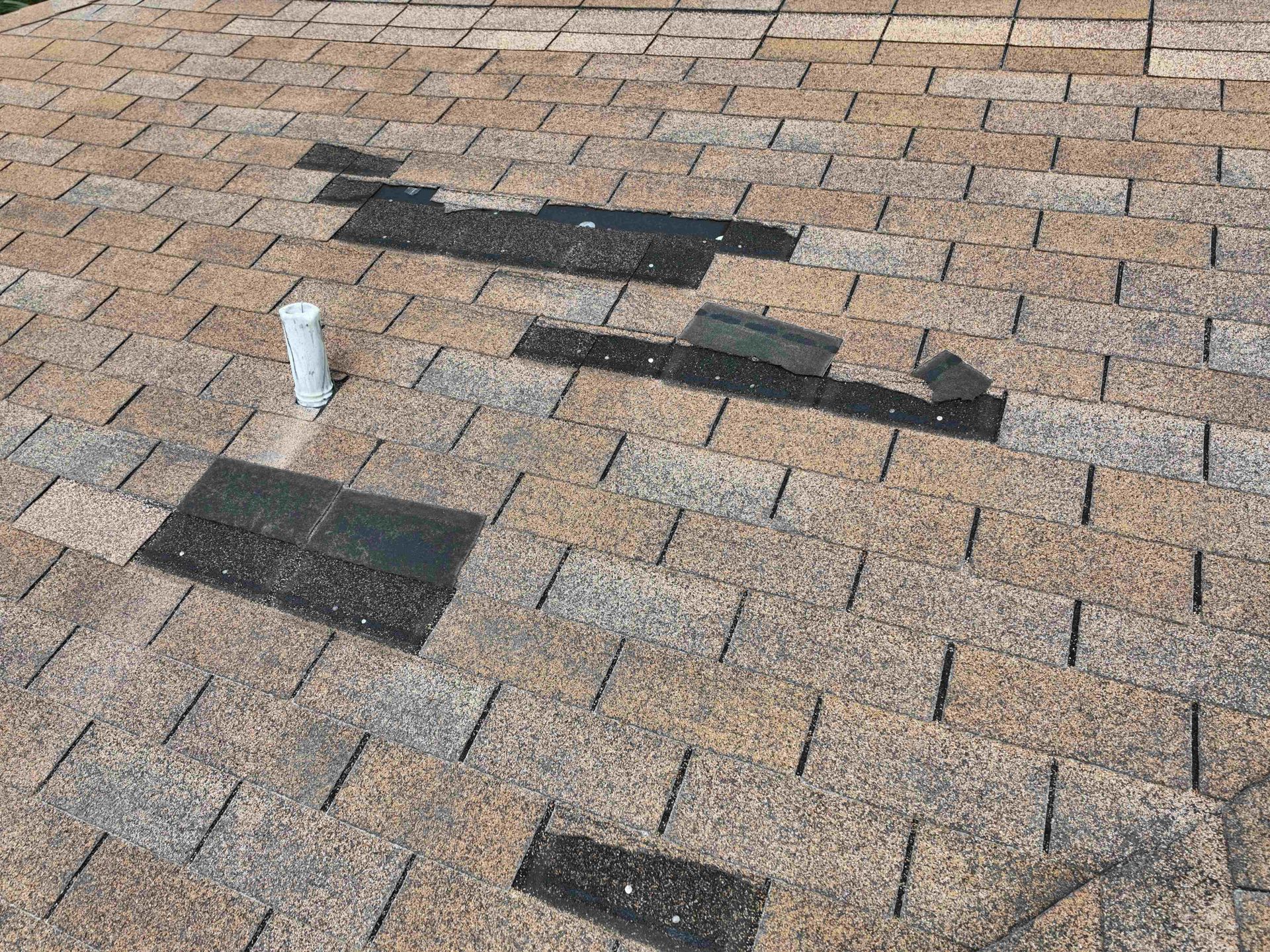
- Shingles that curl, cup, or lose granules faster than they should
- Upstairs rooms that never quite cool down, or AC bills that seem high for your home
- A musty smell, dark staining, or damp-looking wood in the attic
- Insulation pushed up against the roof deck at the eaves
- Bathroom or kitchen fans venting into the attic instead of outside
Want to Take a Look Yourself?
Attics are hot and the footing is tricky, so go in early in the morning before the heat builds, bring a flashlight, and step only on the joists, never on the drywall between them.
- Check whether insulation is blocking the soffit vents at the eaves
- Look along the ridge for any sign of daylight or airflow
- Make sure exhaust fans run to the outdoors
- Look for stains, soft spots, or a musty smell
If you find soft decking or active mold, that’s our department, not yours.
One more thing: some newer homes, and some retrofits, have spray foam on the underside of the roof deck. That makes the attic “sealed” by design, and those follow different rules. Don’t add vents or fans to one without talking to a pro first.
The Cheapest Time to Fix It Is When You’re Already Reroofing
If a new roof is in your future, this is the moment. Everything’s already open, and adding intake vents or a solar fan costs a fraction of what it would later. Putting new shingles over the same under-vented attic just restarts the clock on the same problem.
It’s also worth reading your shingle manufacturer’s warranty. Some tie coverage to proper ventilation, so getting the airflow right can protect your warranty as well as your roof.
Quick Answers
Does attic ventilation really make a roof last longer?
It helps. Heat and trapped moisture are hard on roofing materials and the wood beneath them. It’s one factor among several, along with installation quality, materials, and maintenance.
Is a solar attic fan worth it?
For many homes, yes. A solar fan runs for free on sunlight and helps move hot air out of the attic. It works best with plenty of soffit intake, and the cooling savings are modest, so we treat it as one part of a balanced system.
What’s the difference between a solar attic fan and a plug-in one?
A solar fan runs on its own panel, so there’s nothing to wire and nothing added to your electric bill. Plug-in fans can pull harder, which can draw conditioned air out of your home if intake is limited.
How do I know if my soffit vents are blocked?
From the attic, look for insulation pushed against the roof deck at the eaves. From outside, look for soffits that have been painted over or are missing vent panels.
Can you improve ventilation without replacing the whole roof?
Often, yes. Clearing blocked soffits, adding intake vents, installing a solar fan, or adjusting exhaust can usually be done on an existing roof.
Let’s Take a Look Together
We’re a family-owned roofing company, and we believe the best way to earn a customer for life is to treat them the way we’d want our own parents treated. That means we tell you what we find, we show you what we see, and if your attic is perfectly fine, we’ll tell you that too.
If your attic runs hot, or you can’t remember the last time anyone looked up there, call us or request an inspection at joewardroofing.com. We’ll check what’s on top of your roof and what’s going on underneath it.
Your roof works hard for you every single day. Let’s make sure someone’s looking out for it.