Signs of Roof Damage After a Storm: What Palm Beach and Martin County Homeowners Should Look For
The morning after a storm, most roofs look fine from the driveway. That is exactly the problem.
Wind and wind-driven rain rarely tear a roof apart in one dramatic moment. More often they loosen fasteners, lift shingle tabs, crack a few tiles, or work water past flashing that had been doing its job for years. The roof still looks like a roof. Six weeks later, a brown ring shows up on a bedroom ceiling and the real repair bill starts.
Below is what we tell homeowners across Jupiter, Stuart, Palm Beach Gardens, Hobe Sound, Port St. Lucie, and the rest of our service area to look for after severe weather, and what those signs usually mean.
First: stay off the roof
We understand the instinct to climb up and see for yourself. Please don't.
A roof that has just taken storm damage may have weakened decking, loose tile, or slick algae growth in shaded areas. Tile in particular can break underfoot and turn a small repair into a large one. Almost everything on this list can be spotted from the ground, from a window, or from inside your home. Leave the ladder work to someone who is licensed, insured, and does it every day.
Exterior signs you can see from the ground
Walk the full perimeter of your house with your phone in hand. Take pictures as you go, even of things you are not sure about.
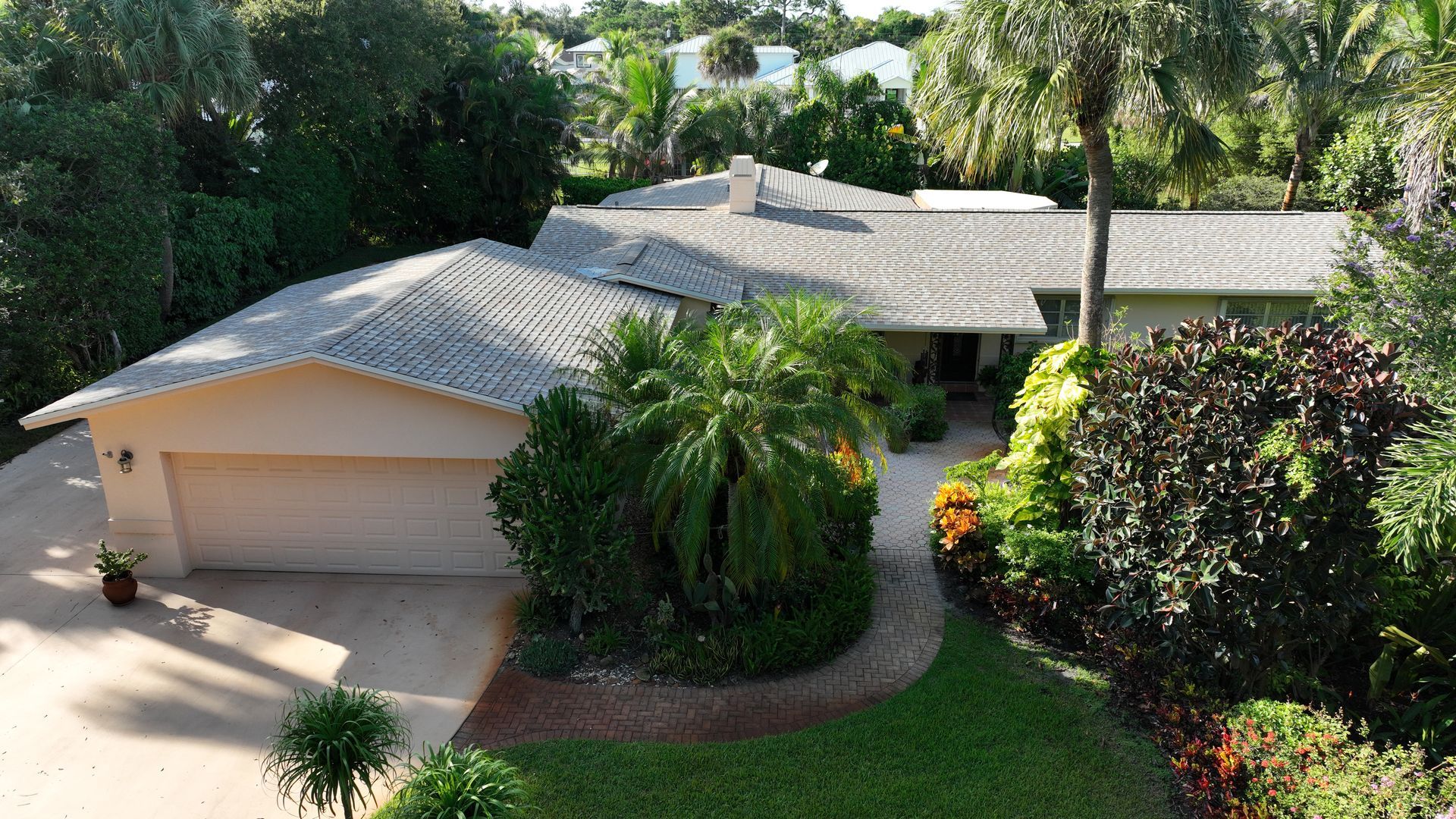
On an asphalt shingle roof, look for:
- Missing shingles, or gaps that show the darker underlayment beneath
- Shingles that look lifted, curled, or slightly out of line with their neighbors, which often means the seal strip broke even though the shingle stayed put
- Bare patches where the granules have washed off, leaving a smoother, darker area
- Piles of granules at the bottom of downspouts or in gutter corners
On a tile roof, look for:
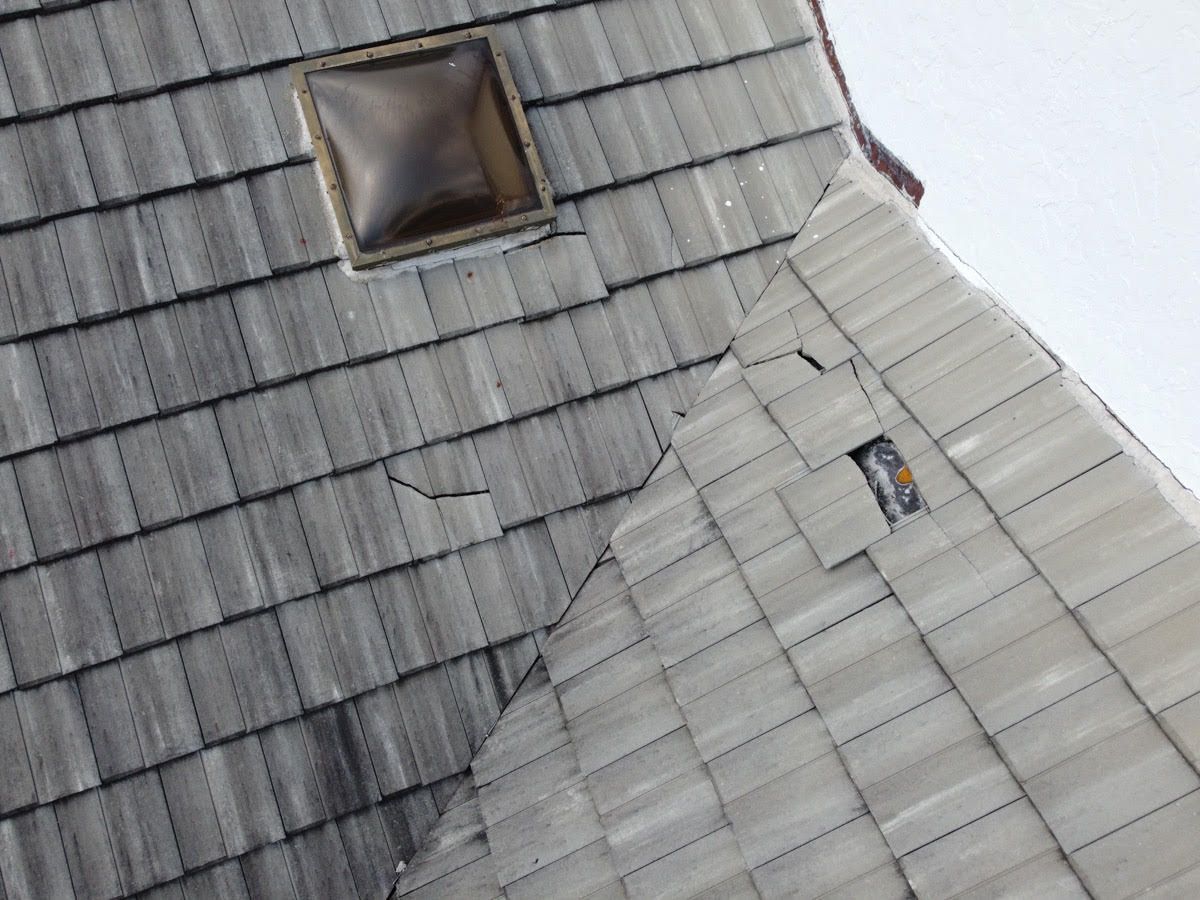
- Cracked, chipped, or slipped tiles
- Tiles that have shifted out of their course, creating an uneven line along the field
- Debris that has landed and stayed put, which can hold water and damage the underlayment below
Keep in mind that on a tile roof, the tile is the first defense but the underlayment is what actually keeps water out. A handful of cracked tiles is not automatically a crisis, but it does need a look, because damage to the underlayment underneath is not visible from the yard.
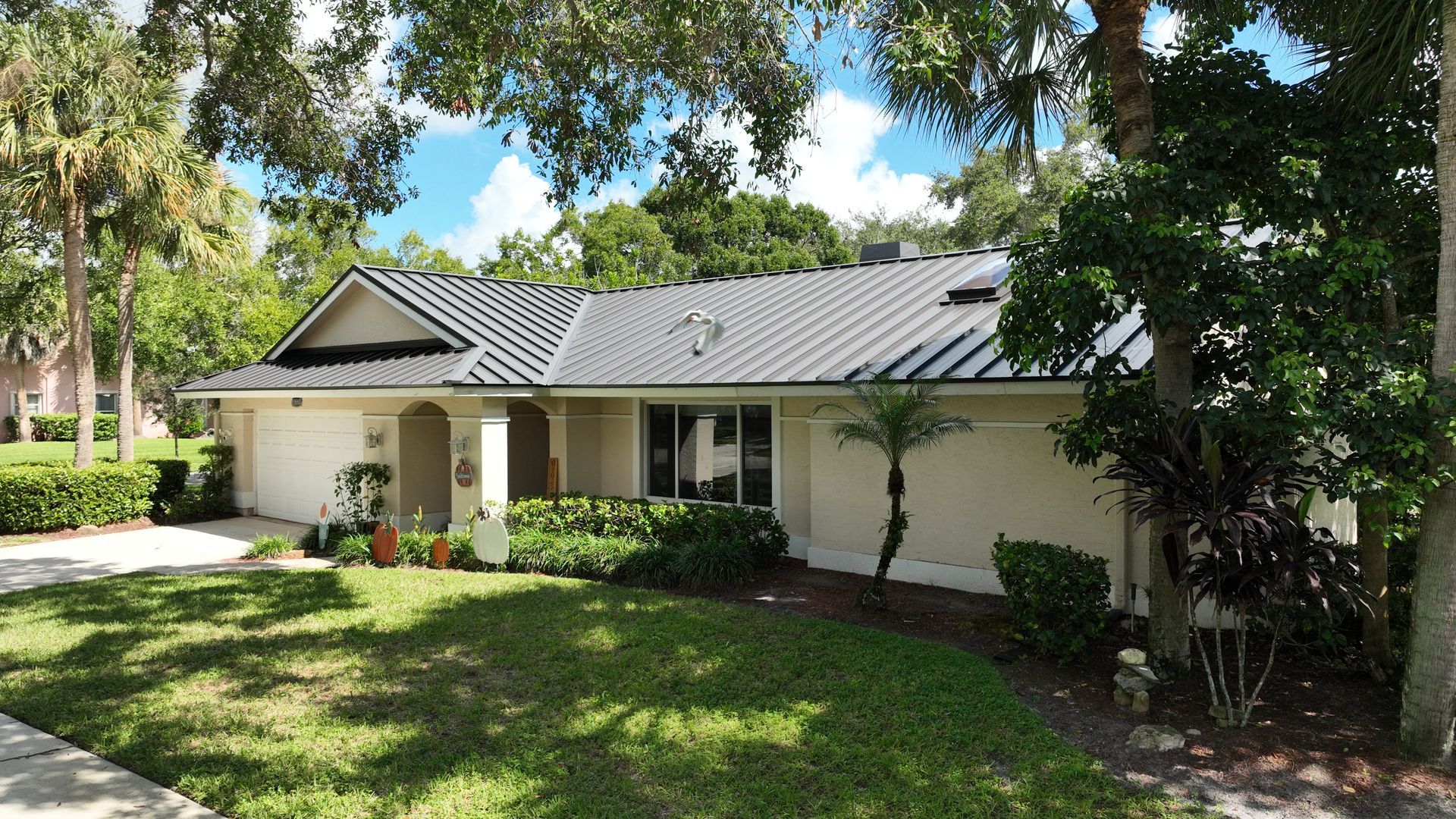
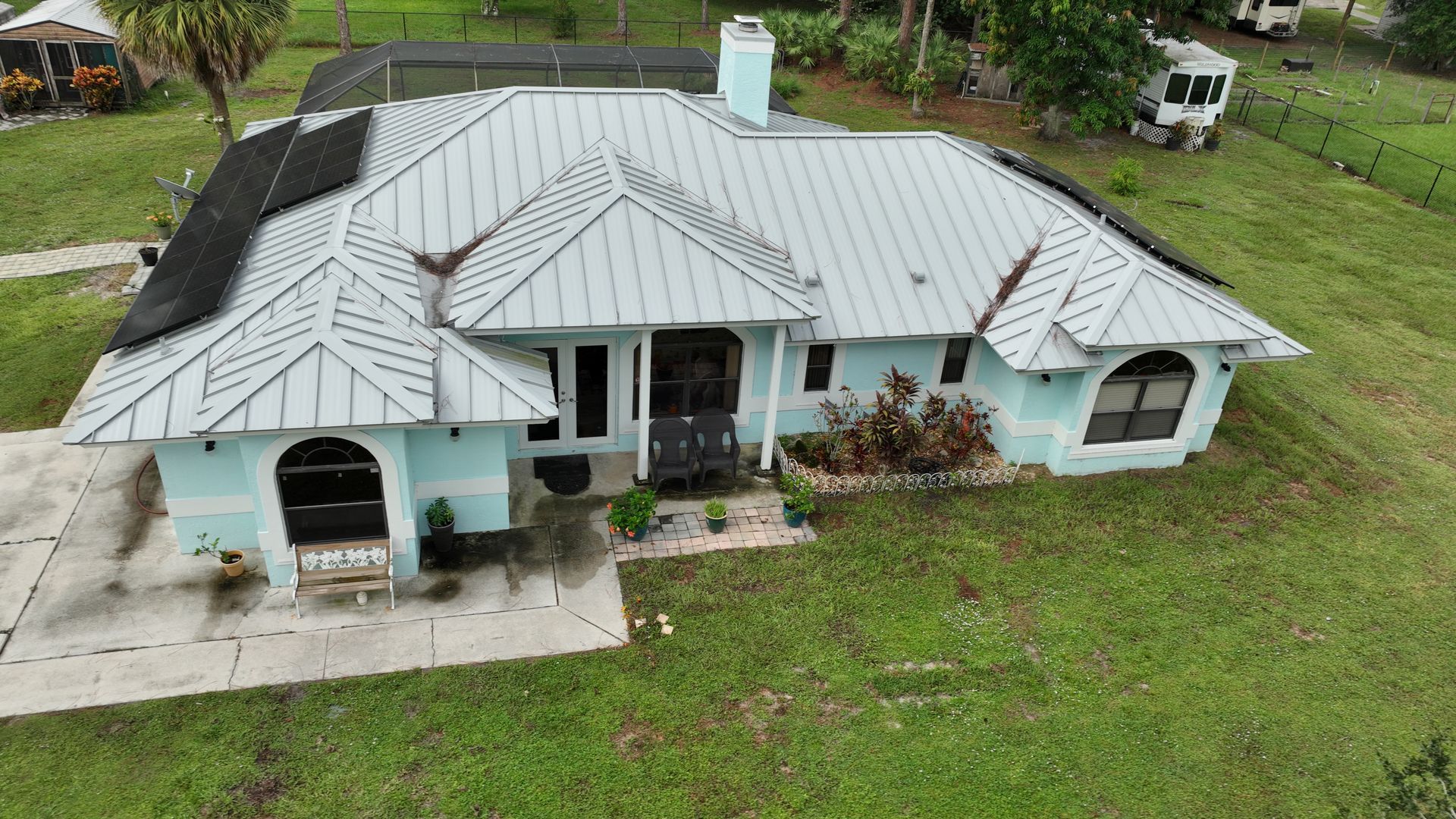
On a metal roof, look for:
- Lifted or separated panel seams
- Backed-out or missing fasteners
- Dents from impact, which are usually cosmetic but can be a clue that something heavy hit the roof
On a flat or low-slope section, look for:
- Ponding water that has not drained a day or two after the rain stopped
- Blistering, bubbling, or a seam that has pulled open
- Clogged or backed-up scuppers and drains
Clues that are not on the roof at all
Some of the most useful evidence sits at eye level.
- Gutters and downspouts. Sagging, pulled-away, or dented sections point to strong wind loads or falling debris.
- Soffit and fascia. Gaps, buckling, or a panel that has dropped out of its channel are common wind-damage points in our area and an easy path for water and pests.
- Vents, boots, and roof penetrations. Look for anything sitting at an odd angle, and check that the rubber boots around plumbing vents are not cracked or lifted.
- Soft metal around the property. Fresh dents in AC condenser fins, mailboxes, gutter aprons, or window screens often mean hail passed through, which is less common here than in North Florida but does happen.
- The ground itself. Shingle pieces, tile fragments, or ridge cap in the yard came from somewhere. So did that fallen branch.
Interior signs of roof damage
Head inside and check the ceilings in every room, not just the one under the loudest part of the storm.
- Water stains or brown rings on ceilings and along the tops of walls
- Bubbling, peeling, or blistering paint
- Damp or musty smells, especially in closets and along exterior walls
- Daylight visible through the attic, if you have an accessible attic and can look safely from the hatch
- Wet or matted insulation, or dark streaks on the underside of the decking
- Water around windows, which sometimes originates higher up and travels
A stain that is still damp to the touch usually means an active leak. A dry, hardened stain may be older, but it still deserves attention because roof leaks rarely fix themselves.
The signs that show up weeks later
This is the category that catches people. Not every storm-related failure leaks immediately. Wind can break the seal between shingle courses without displacing anything, and the roof will hold up fine until the next heavy rain drives water sideways underneath. Fasteners can back out slowly. A hairline crack in a tile can spread across a few hot afternoons.
If you notice a new stain, a musty odor, or a soft spot in a ceiling in the months after a named storm, it is worth connecting the dots back to that weather event rather than treating it as an unrelated problem.
What to do in the first 48 hours
- Document everything. Photograph and video the exterior, the interior, and any debris before you clean anything up. Note the date. If you have older photos of your roof from a home inspection or a past project, set those aside too, because a clear before-and-after helps.
- Limit further damage where you safely can. Move furniture, put down buckets, and pull up soaked rugs. A tarp can help, but tarping a roof is climbing work, and it is worth having someone qualified do it.
- Get a professional inspection before you sign anything. Storms bring out-of-town crews to South Florida within days. Some are excellent. Some are not licensed to work in Florida at all. Before you hand anyone a contract or an insurance assignment, verify their license, their insurance, and their local track record.
When to call a roofing contractor
Call if you see any of the interior signs above, any missing or displaced roofing material, or any damage to flashing, vents, or soffit. Call if a large branch or a piece of someone else's property landed on your roof, even if nothing looks broken. And call if your roof is more than about fifteen years old and took a direct hit from a named storm, since older roofing systems have less margin left.
A professional inspection gives you two things a driveway walk-around cannot: a look at the parts of the system you cannot see, and written documentation with photos that will matter if you file a claim.
Joe Ward Roofing is a family-owned company serving Palm Beach and Martin Counties. We inspect roofs after storms, explain honestly what we find, and tell homeowners when a repair will do the job instead of pushing a replacement.
Call us or request an inspection online, and we will get someone out to take a look.
Frequently Asked Questions
How soon after a storm should I have my roof inspected? As soon as it is safe and you can get on a schedule. Getting on the list early matters after a widespread storm, and documenting damage close to the event makes the timeline easier to establish with your insurer.
Can a roof be damaged even if no shingles are missing? Yes. Wind commonly breaks the adhesive seal between shingles without removing them, and the roof can look untouched from the ground while it has lost its resistance to wind-driven rain.
Will my insurance cover storm damage to my roof? That depends on your policy, your deductible, the age and condition of your roof, and how the damage is documented. Your carrier makes that determination. What you can control is reporting promptly and having thorough photo documentation from a qualified inspection.
Is it safe to climb up and check my own roof? We do not recommend it. Storm damage can leave decking, tile, and edges unstable in ways that are not visible until weight is on them.
Do I need a full roof replacement after storm damage? Not always. Plenty of storm damage is repairable, particularly when it is localized and the underlying system is sound. The age and overall condition of the roof are what usually tip the decision toward replacement.